PECVD
Plasma Enhanced CVD
PECVD 공정 소개
PECVD(Plasma Enhanced CVD)는 LPCVD가 못 다루는 온도 영역을 채우는 박막 증착 공정입니다. 기판 온도를 200~400°C로 낮춰도 플라즈마가 전구체를 활성화해주기 때문에, 이미 금속 배선이 깔린 웨이퍼 위에도 SiO₂·SiN을 올릴 수 있습니다. 단점은 막 안에 수소가 갇히고 밀도가 떨어진다는 점 — 이 시뮬레이터는 기판 온도를 올리면 수소 함량은 줄어드는 대신 thermal budget이 늘어나는 트레이드오프를 직접 손으로 만져볼 수 있게 했습니다.
Overview
Study how substrate temperature affects PECVD SiO₂ film quality. Explore the relationship between deposition temperature, hydrogen content, and film density for various application requirements.
What it demonstrates
- Temperature vs. film quality trade-off
- Hydrogen content control
- Film density optimization
Interactive Demo: Temperature Effect on Film Quality
Explore how substrate temperature affects PECVD SiO₂ film properties. Observe the trade-off between hydrogen content, film density, and thermal budget.
Mission: Temperature Effect
Adjust substrate temperature and observe how it affects hydrogen content and film density.
Film Properties
• Good film density
• Quality and thermal budget balanced
Understanding Temperature Effects in PECVD SiO₂
Why Does Temperature Matter?
PECVD films contain hydrogen (H) from the SiH₄ precursor. At low temperatures, not all H is removed, leaving Si-H and Si-OH bonds in the film. Higher temperatures promote H desorption and denser, more stoichiometric SiO₂.
Hydrogen Problem
Excess hydrogen in PECVD oxide can cause problems:
- Bubbles during high-temp annealing (H₂ outgassing)
- Lower breakdown voltage (porous film)
- Higher etch rate in HF solutions
Temperature Trade-offs
For temperature-sensitive devices
H: 18-25%
Good quality/thermal balance
H: 10-15%
Near thermal oxide quality
H: 5-8%
More advanced simulations including gas ratio optimization and multi-layer deposition are available under institutional access.
이 시뮬레이터가 계산하는 것
슬라이더는 하나입니다 — 기판 온도 200~450°C. 그 값 하나로 세 가지가 동시에 다시 계산됩니다. 가스는 SiH₄ + N₂O이고, 올리는 막은 SiO₂입니다.
- 수소 함량은 온도에 반비례해 곧게 내려가다 5%에서 멈춥니다(429°C부터 바닥).
- 막 밀도는 곧게 올라가다 100%에서 멈춥니다(400°C부터 천장).
- 증착률만 꺾입니다. 400°C까지 오르다가, 그 뒤로는 내려옵니다.
RF 파워·챔버 압력·가스 유량비는 이 화면에서 고정입니다. 막 응력과 스텝 커버리지도 들어 있지 않습니다 — 그건 아래 「이 화면이 보여주지 않는 것」에서 따로 짚겠습니다. 이 글의 숫자는 전부 이 페이지 시뮬레이터가 실제로 내놓는 값입니다.
PECVD가 있는 이유 — 금속 위에서는 600°C를 못 쓴다
CVD는 하나가 아닙니다. 전구체를 무엇으로 깨느냐에 따라 필요한 온도가 갈립니다.
| 방식 | 온도 | 압력 | 에너지원 |
|---|---|---|---|
| Thermal CVD | 600~900°C | 대기압~저압 | 열 |
| LPCVD | 600~900°C | 0.1~10 Torr | 열 |
| PECVD | 200~400°C | 1~10 Torr | 플라즈마 |
| ALD | 100~400°C | 0.1~10 Torr | 표면 반응 |
열만으로 깨려면 600°C가 넘게 듭니다. 그런데 배선이 깔린 웨이퍼는 그 온도를 못 견딥니다 — 알루미늄은 660°C에서 녹고, 그보다 한참 낮은 400°C대부터 힐록·전자이동 같은 문제가 시작됩니다. 금속이 올라간 다음에는 LPCVD를 쓸 수 없습니다.
플라즈마가 그 자리를 채웁니다. 전자가 SiH₄를 때려 라디칼로 만들어 놓으면, 표면 반응에 필요한 에너지를 열로 다 낼 필요가 없어집니다. 그래서 같은 막을 200~400°C에서 올립니다. 패시베이션(보호막), IMD(층간 절연막), 하드마스크 — 후공정의 절연막은 거의 다 여기서 나옵니다.
공짜는 아닙니다. 전구체를 플라즈마로 깨면 수소가 막 안에 갇힙니다. 이 시뮬레이터가 온도 하나만 슬라이더로 내놓은 이유가 그것입니다 — 온도는 그 수소를 빼내는 유일한 손잡이입니다.
온도를 올리면 무엇을 얻고 무엇을 잃나
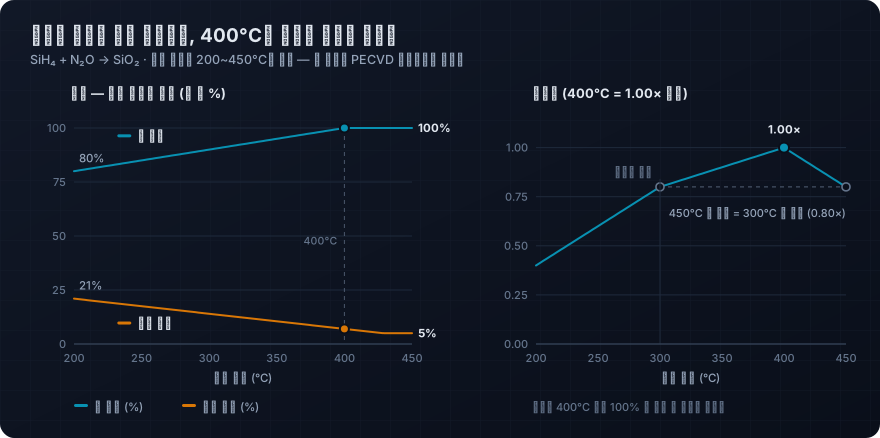
여섯 지점만 뽑으면 이렇습니다.
| 기판 온도 | 수소 함량 | 막 밀도 | 증착률 | 화면의 판정 |
|---|---|---|---|---|
| 200°C | 21.0% | 80% | 0.40× | 저온 — 버블 위험 |
| 250°C | 17.5% | 85% | 0.60× | 저온 |
| 300°C | 14.0% | 90% | 0.80× | 표준 |
| 350°C | 10.5% | 95% | 0.90× | 표준 |
| 400°C | 7.0% | 100% | 1.00× | 고온 경계 |
| 450°C | 5.0% | 100% | 0.80× | 고온 — thermal budget |
200°C에서 400°C까지는 모든 축이 같은 방향입니다. 수소는 21%에서 7%로 3분의 1이 되고, 밀도는 80%에서 100%로 올라가고, 증착률은 0.40배에서 1.00배로 2.5배가 됩니다. 이 구간에서는 온도를 올려 잃는 것이 thermal budget 하나뿐입니다.
증착률이 오르는 기울기는 300°C에서 한 번 꺾입니다. 200~300°C 구간은 10°C당 0.04배씩 오르지만, 300~400°C 구간은 10°C당 0.02배 — 절반으로 줄어듭니다. 온도로 속도를 사는 효율이 300°C를 지나며 떨어진다는 뜻입니다.
400°C를 넘기면 속도만 잃는다
이 화면에서 가장 분명한 결론입니다. 400°C가 세 축 모두의 꼭짓점입니다.
- 밀도는 400°C에서 100%에 걸립니다. 더 올려도 그대로입니다.
- 수소는 400°C에서 7.0%, 450°C에서 5.0% — 50°C를 더 써서 2%p를 얻습니다. 그마저 429°C부터는 바닥이라 더 안 내려갑니다.
- 증착률은 400°C에서 1.00배로 꼭짓점을 찍고 10°C당 0.04배씩 떨어집니다. 450°C에서는 0.80배 — 300°C일 때와 똑같은 속도입니다.
450°C로 올린다는 건 300°C의 속도로 돌리면서 250°C만큼의 thermal budget을 더 쓴다는 뜻입니다. 밀도는 400°C와 같고 수소만 2%p 낫습니다. 웨이퍼에 금속이 올라가 있다면 이건 손해 보는 거래입니다.
이 꺾임은 실제 PECVD에서도 관찰됩니다. 온도가 높아지면 표면 반응이 빨라지는 대신 전구체가 표면에 머무는 시간이 줄고, 기상에서 미리 소모되는 양도 늘어납니다. 다만 이 시뮬레이터의 400°C 꼭짓점은 교육용으로 정해 둔 지점이지 실측 피팅이 아닙니다 — 실제 장비의 꼭짓점 온도는 가스비·압력·RF 파워에 따라 움직입니다.
수소는 나중에 문제를 만든다
증착 직후에는 수소가 많은 막도 멀쩡해 보입니다. 문제는 그 다음 공정에서 터집니다.
SiH₄에서 온 수소는 Si-H, Si-OH 결합으로 막 안에 남습니다. 이 막을 나중에 고온 공정에 넣으면 그 결합이 끊어지며 H₂로 빠져나가는데, 빠져나갈 길이 없으면 막이 부풀어 버블이 생깁니다. 밀도가 낮다는 것도 같은 이야기의 다른 표현입니다 — 막에 빈 곳이 많아 항복 전압이 낮아지고, HF 용액에 담그면 식각이 훨씬 빨리 들어갑니다. 절연막으로 쓰려고 올린 막이 절연을 제대로 못 하고, 패턴 공정에서 치수가 안 맞습니다.
시뮬레이터는 두 자리에 경고를 걸어 둡니다. 계산해 보면 이렇습니다.
- 수소 18% 초과 → 243°C 미만에서 걸립니다. "후속 고온 공정에서 버블 위험."
- 밀도 85% 미만 → 250°C 미만에서 걸립니다. "절연 특성 부족."
즉 250°C 아래는 이 화면이 명시적으로 말리는 영역입니다. 저온이 필요해서 PECVD를 쓰는 건데, 너무 내리면 쓰려던 이유 자체가 사라집니다. 화면이 권하는 구간은 280~400°C이고, 그 안에서 수소는 15% 아래, 밀도는 90% 근처로 들어옵니다.
장비는 이렇게 생겼다

실제 PECVD 장비 화면은 이 모양입니다. 위 도면은 SemiFab 장비 교육 창고에서 구워 온 CCP(용량결합) 챔버 니모닉으로, 가스 라인이 SiN 레시피(SiH₄ + NH₃ + N₂) 기준입니다. 이 페이지 시뮬레이터의 SiO₂는 NH₃ 자리에 N₂O가 들어갈 뿐, 챔버 구조는 같습니다.
도면에서 읽을 것 네 가지입니다.
- 샤워헤드가 곧 상부 전극입니다. 가스를 뿌리는 판과 RF를 거는 전극이 같은 물건입니다. 유전체 윈도우를 통해 코일로 거는 ICP와 갈리는 지점이 여기입니다.
- 히터 척이 하부 전극입니다. 이 페이지의 슬라이더가 움직이는 것이 바로 이 척의 온도(도면의 TIC 301, 380°C)입니다. 웨이퍼를 데우는 물건과 바이어스를 거는 물건이 하나입니다.
- RF가 둘입니다. 13.56 MHz HF 400W와 380 kHz LF 80W. 고주파는 플라즈마 밀도를, 저주파는 이온 충격(그리고 막 응력)을 주로 움직입니다. 이 시뮬레이터에는 이 두 손잡이가 없습니다.
- 압력이 1.8 Torr입니다. 식각 챔버의 mTorr대와 세 자릿수 차이입니다. PECVD가 같은 플라즈마를 쓰면서도 이온 에너지가 낮은 이유 — 충돌이 잦아 이온이 시스에서 에너지를 다 못 얻습니다.
왼쪽 아래 "클린 후 경과 620장"도 실제 현장의 항목입니다. 챔버 벽에도 막이 쌓이므로 주기적으로 NF₃ 같은 가스로 긁어냅니다. 이 카운트를 넘기면 벽의 막이 떨어져 파티클이 됩니다.
SiN도 같은 챔버에서 나온다
SiO₂만 올리는 장비가 아닙니다. 가스만 바꾸면 SiN, a-Si가 같은 챔버에서 나옵니다.
| 막 | 주 용도 | 특징 |
|---|---|---|
| SiO₂ | 층간 절연(IMD/ILD) | 저온 증착 — 이 페이지 시뮬레이터가 다루는 막 |
| SiN | 패시베이션 · 확산 배리어 | 치밀, 압축 응력 제어가 관건 |
| a-Si | 비정질 실리콘 | 디스플레이 · 태양전지 |
PECVD SiN의 막질은 굴절률(RI)로 잽니다. 화학량론 Si₃N₄가 RI 2.0이고, 2.0보다 크면 Si-rich, 작으면 N-rich입니다. 한 숫자로 조성을 읽는 현장 지표입니다.
그리고 PECVD에서 진짜로 막을 죽이는 것은 응력입니다. RF 파워를 올리면 이온 충격이 세져 막이 치밀해지는데, 동시에 압축 응력 쪽으로 밀립니다. 과하면 크랙이 가거나 박리됩니다. 반대로 인장 쪽으로 치우쳐도 갈라집니다. 그래서 실제 PECVD 레시피는 HF와 LF의 비율로 응력을 0 근처로 맞추는 작업이 큰 비중을 차지합니다.
이 화면이 보여주지 않는 것
정직하게 적습니다. 이 시뮬레이터는 온도 하나의 교육용 모델입니다.
- 응력이 없습니다. 위에서 적은 대로 현장에서 PECVD 막을 가장 자주 망치는 것이 응력인데, 이 화면에는 그 축이 없습니다.
- RF 파워와 압력이 없습니다. 실제 증착률은 온도보다 RF 파워·압력·가스비에 훨씬 민감합니다. 이 화면의 증착률 곡선은 나머지를 전부 고정했을 때의 온도 의존성만 그린 것입니다.
- 곡선이 직선입니다. 수소와 밀도가 온도의 1차 함수입니다. 실제로는 Si-H 결합의 탈리가 활성화 에너지를 갖는 과정이라 지수적으로 움직입니다. 경향을 손으로 만져보기 위한 모델이지, 레시피 계산기가 아닙니다.
- 두께 균일도와 스텝 커버리지가 없습니다. 웨이퍼 전면의 편차, 단차 덮임은 다루지 않습니다.
경향을 손에 익히는 데까지가 이 화면의 몫입니다. 노브를 여러 개 동시에 돌려보려면 미니팹 쪽 PECVD 장비 시뮬레이터로 가야 합니다.
현장에서 자주 틀리는 것 넷
- "온도는 높을수록 좋다." 400°C까지만 맞습니다. 그 위로는 밀도가 더 안 오르고 속도만 떨어집니다 — 450°C는 300°C의 속도로 돌아갑니다.
- "PECVD SiO₂는 열산화막과 같다." 다릅니다. 수소가 들었고 밀도가 낮습니다. HF 식각률과 항복 전압이 다르므로, 열산화막 기준으로 잡은 습식 식각 시간을 그대로 쓰면 과식각이 납니다.
- 저온 막을 그대로 고온 공정에 보낸다. 250°C 아래에서 올린 막은 수소가 18%를 넘습니다. 후속 어닐에서 H₂가 빠져나오며 버블이 생깁니다. 저온이 꼭 필요했다면 증착 후 치밀화(densification) 단계를 함께 계획해야 합니다.
- RI만 보고 막질을 판정한다. RI 2.0은 조성이 맞다는 뜻이지 막이 안 갈라진다는 뜻이 아닙니다. 응력을 따로 재야 합니다.
이어서 볼 것
같은 막을 열로만 올리면 어떻게 되는지는 LPCVD 모듈에서 온도창과 활성화 에너지로 다룹니다. 두 공정을 온도축에 나란히 놓고 비교한 글은 LPCVD vs PECVD — 온도가 가르는 것에 있습니다.
Access this module
This module is available under an institutional education license. Request access for your organization.